
Benefits of Buying a Plot in a Gated Community
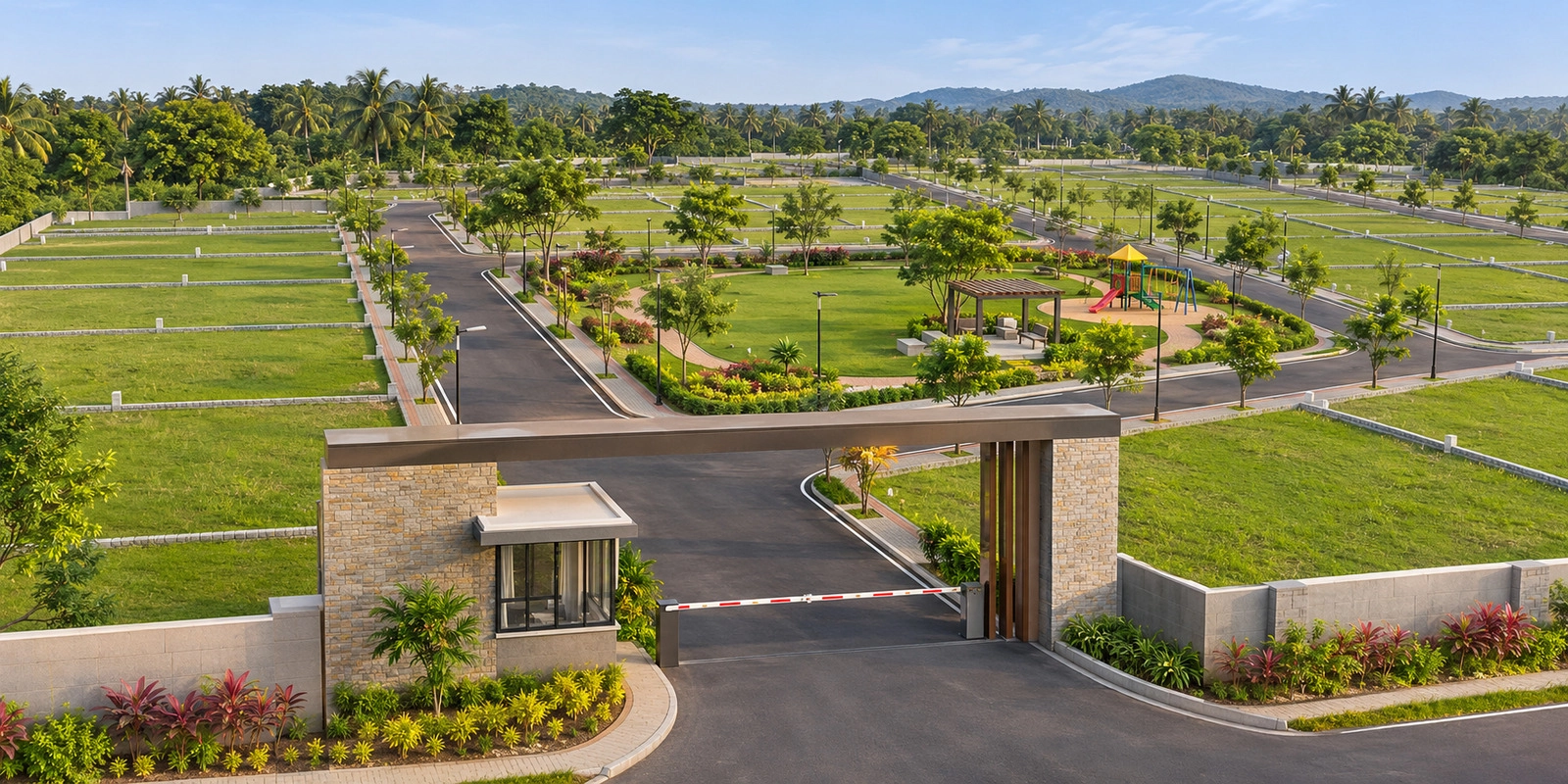
Thinking about gated community plots? Here is what you gain, how they differ from standalone plots, and what to check before you pay an advance for your own plot.
Most people start their plot search with a budget and a map. They look at a few layouts, compare prices per square foot, and visit whichever site feels closest to home. What often gets missed is how daily life will feel once the plot becomes a house. Who looks after the roads? Will the street have lights at night? Can your parents walk around the lane safely in the evening? Who stops strangers from dumping garbage on the empty plot next to yours?
These questions matter more than most buyers expect, and they are the reason many families now prefer gated community plots over scattered standalone land. A plot inside a planned, walled layout comes with a defined entry point, internal roads, drainage lines, street lights and shared spaces that are sorted out before you ever lay a brick. You are not buying just a patch of land. You are buying into a setup that is already organised. That setup usually protects your investment too, since a well kept layout tends to attract better buyers when you decide to sell. Of course, a gated layout is not automatically a good one.
Some projects have poor approvals, unclear maintenance rules or amenities that exist only in the brochure. Others are priced far above what the location can support. So it helps to know what you are paying for and what you should check before signing anything. This blog walks you through what a plotted development actually is, the real advantages it offers, how it compares with a standalone plot, and the checks worth making before you pay an advance. It also helps you decide whether this kind of plot suits your plans, your family and your budget. Read it slowly, note down the points that matter to you, and carry them along on your next site visit.
Table of Contents
- What Is a Gated Community Plotted Development?
- What Are the Benefits of Buying a Plot in a Gated Community?
- Gated Community Plots vs Standalone Plots: Key Differences
- What Should You Check Before Buying a Gated Community Plot?
- Is Buying a Plot in a Gated Community Right for You?
- Conclusion
- Frequently Asked Questions (FAQs)
What Is a Gated Community Plotted Development?
A gated community plotted development is land that a developer has divided into residential plots, enclosed with a boundary wall and opened through a controlled entrance. You buy the plot and build the house yourself. The developer takes care of the shared infrastructure.
The layout is planned to accommodate individual residential plots along with common infrastructure and, where provided, shared amenities. Depending on the project's design, the facilities may include:
- A compound wall and a main gate with a guard room
- Tar or concrete internal roads
- Underground drainage and water lines
- Street lights and electrical connections
- Parks, play areas or open spaces
- Numbered plots with marked boundaries
A well planned gated community layout keeps plots in neat rows, leaves enough room for roads and open areas, and marks every plot clearly. That makes it much easier to check your boundaries before you buy.
Some developments may also have additional facilities such as a clubhouse, walking paths, landscaped gardens or recreational areas. However, the availability of these facilities depends on the individual project and should be verified before purchase.
You may also come across a semi gated community, where only part of the layout is walled or the entry is not fully controlled. These usually cost a little less, but the protection and shared facilities can be limited.
What Are the Benefits of Buying a Plot in a Gated Community?
The benefits of living in a gated community go well beyond a boundary wall. A planned layout can offer several practical advantages, particularly for families planning to construct a home and live there for the long term. Some of the key benefits include:
- Better safety: Controlled entry, guards and, in many projects, CCTV cameras give the layout a level of gated security that open plots rarely have. However, the actual level of security depends on how well these arrangements are maintained.
- Planned infrastructure: Roads, drains, water and power lines are laid before construction begins. This can reduce the need for individual plot owners to arrange basic infrastructure separately.
- Clear, approved plots: Every plot has a number, a size and marked boundaries before you buy, so you are unlikely to argue with a neighbour over a few feet of land later.
- Shared amenities: The park, the play area and the community hall belong to everyone in the layout. This is one big reason families pick gated housing over a single plot on an open street.
- Cleaner surroundings: Because the upkeep cost is shared, someone actually sweeps the lanes, clears the drains and trims the open spaces. You don’t have to keep chasing the local office for it.
- Quieter lanes: With fewer strangers walking in and cars moving slowly, children can cycle outside, and elders can take an evening walk without worry in a gated community.
- Stronger resale appeal: Buyers are often willing to pay more for a plot inside a well-kept gated community.
If you plan to build a villa, gated community villa plots deserve a closer look. They tend to be larger, sit in quieter parts of the layout, and often follow planning rules that keep the street looking uniform.
At the top end, luxury gated communities add clubhouses, swimming pools, gyms and landscaped gardens. They also bring higher prices and higher maintenance costs, so weigh them against what you will really use.
Also Read: How to Verify Land Ownership Before Buying: A Buyer’s Guide
Gated Community Plots vs Standalone Plots: Key Differences
The table below shows how a plot in a gated community differs from a standalone plot on an open road.
| Basis | Gated Plot | Standalone Plot |
|---|---|---|
| Security | Controlled entry and guards | Depends on you and your neighbours |
| Roads and drainage | Laid by the developer | Often public and uneven |
| Amenities | Shared parks and play areas | Usually none |
| Maintenance | Monthly charges apply | No fixed charges |
| Building freedom | Developer’s rules may apply | Mostly your choice |
| Price | Usually higher | Usually lower |
| Resale | Good demand for approved layouts | Varies by location |
Standalone plots give you more freedom and often cost less per square foot. Gated housing gives you convenience and security, but you follow community rules and pay maintenance. Neither choice is right for everyone. The right option depends on your budget, construction plans, preferred location and the level of shared infrastructure you need.
Before you decide, visit a few nearby gated communities that already have residents. Ask them about maintenance, water supply and how the association works. Their answers will tell you more than any brochure.
What Should You Check Before Buying a Gated Community Plot?
A well-presented project does not automatically mean that the land and approvals are in order. Before paying an advance, verify the legal documents, project infrastructure and terms of purchase. Use the following checklist:
- Land title: Get a lawyer to go through the sale deed, Patta and encumbrance certificate before you pay anything.
- Approvals and RERA: Search for a DTCP or CMDA approval and a RERA number. Ask to see the papers instead of taking the agent’s word.
- Developer’s track record: Visit a project they finished earlier. Check whether the roads, park and gate were built the way they were promised.
- Amenities in writing: If the brochure shows a park or a hall, it should also appear in the agreement.
- Maintenance charges: Find out how much a gated community project collects every month, who handles the money and what it pays for.
- Building rules: Ask about setback limits, height limits and whether you must use the developer’s own builder.
- Location and access: Check how wide the road is, the depth of the flooding when it rains heavily and how far away the school and hospital are situated. Then compare the price and facilities with nearby gated communities.
Visit the site more than once, ideally at different times of the day. A gated community that looks calm at noon may have very different traffic in the evening.
If you are still comparing options, browsing land for sale in chennai lets you see prices and locations side by side. East Coast Road remains a popular choice for its sea breeze and growth potential. Looking at plots for sale on ECR can show you how layouts there compare with those in the city.
Be careful with projects that promise too much. Some luxury gated communities advertise amenities that are still only on paper, so ask for photos of what is actually built, not computer renderings.
Finally, compare the complete purchase cost rather than looking only at the price per square foot. Compare gated community plots in the same area, and add registration, maintenance deposit and development charges to the total.
Also Read: Stamp Duty on Gift Deed: Registration Charges, Calculation and Rules in India
Is Buying a Plot in a Gated Community Right for You?
If you prefer security, pre-planned roads and common facilities over mere freedom, a plot in a gated community is just right for you.
It may suit you if:
- You want a safe place for children or elderly parents
- You prefer ready roads, drains and street lights
- You are fine with paying monthly maintenance
- You plan to build a home and stay for many years
- You want a plot that is easier to resell
It may not suit you if:
- You want full control over design and builder
- You want the lowest possible price per square foot
- You dislike following association rules
Think about your budget and timeline too. Gated housing usually costs more upfront, and its benefits show up over many years.
Conclusion
A gated community plot can offer safety, planned infrastructure and steady resale demand, but only when the project is genuine and the papers are clean. Whether you choose a modest layout or one of the luxury gated communities, check the title, approvals, amenities and maintenance terms first.
The right gated community should offer more than a boundary wall. Its location, infrastructure, maintenance arrangements and legal approvals all play an important role in determining whether it is suitable for your needs. Take time to visit the project, verify the documents and understand the complete cost before making your decision.
Also Read: CMDA Approval: What It Means and Why It Matters
Frequently Asked Questions (FAQs)
Recent Blogs




Blog Categories
Plots by Locations
- Plots for Sale in Chennai
- Plots for Sale in Thirumazhisai
- Plots for Sale in Madhavaram
- Plots for Sale in Manali New Town
- Plots for Sale in Mudichur
- Plots for Sale in Naduveerapattu
- Plots for Sale in Poonamallee
- Plots for Sale in ECR
- Plots for Sale in Kundrathur
- Plots for Sale in Mangadu
- Plots for Sale in Manimangalam
- Plots for Sale in Maraimalai Nagar
- Plots for Sale in Minjur
- Plots for Sale in Moolakadai
- Plots for Sale in Pallavaram
- Plots for Sale in Perambur
- Plots for Sale in Redhills
- Plots for Sale in Tambaram
- Plots for Sale in Ponneri
- Plots for Sale in Thandalam
- Plots for Sale in Perungalathur
- Plots for Sale in Vandalur
- Plots for Sale in Tiruvottiyur
- Plots for Sale in Tondiarpet
- Plots for Sale in Villivakkam