
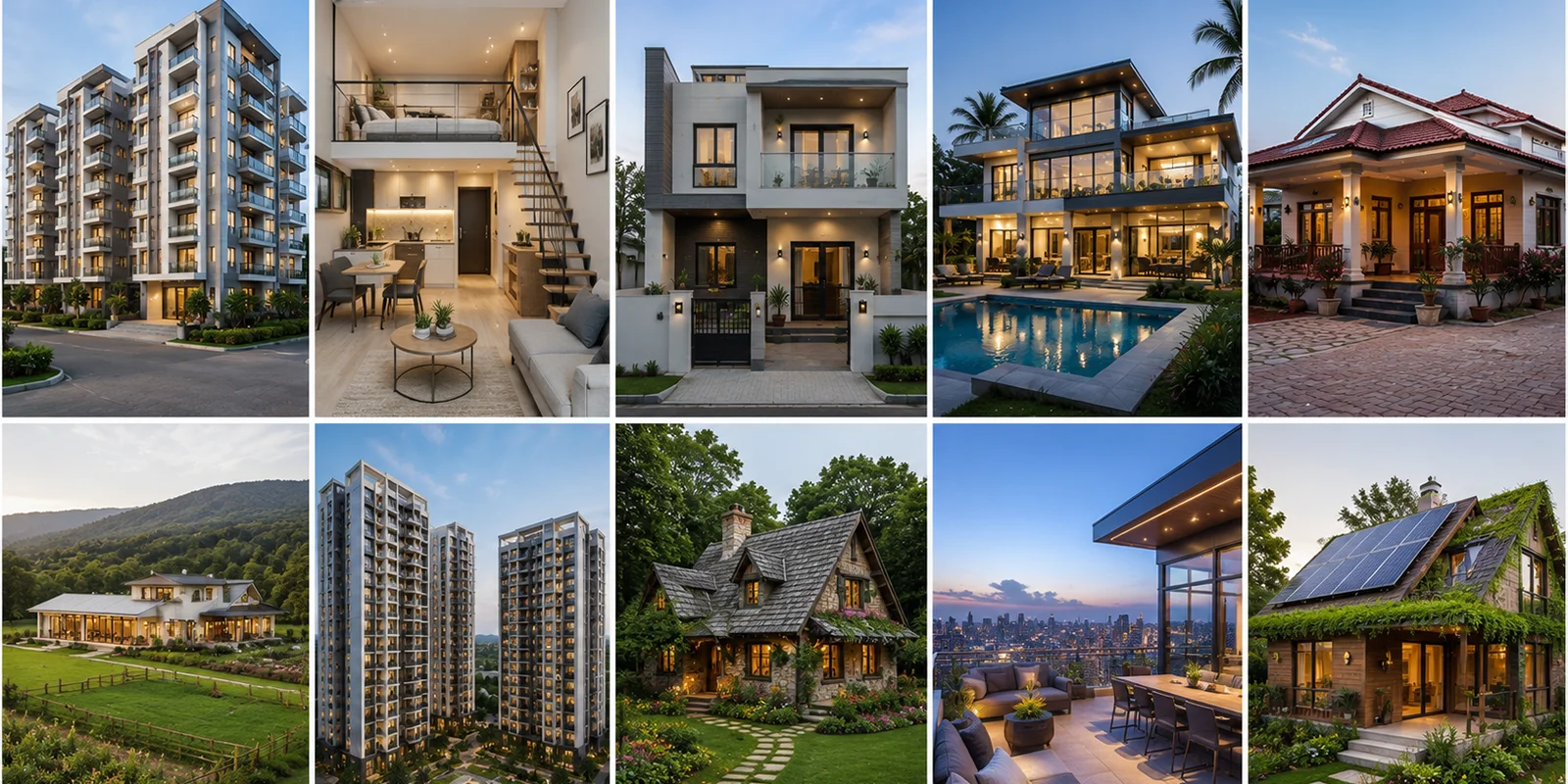
Types of Houses in India: A Guide to Different House Types
India offers a wide variety of housing options, from apartments and studio flats to villas, bungalows, duplexes, farmhouses, cottages, and penthouses. Traditional homes such as havelis and courtyard houses also reflect the country's diverse architectural heritage. Each type of residence differs in terms of space, privacy, maintenance, ownership structure, amenities, and lifestyle suitability. Understanding these differences can help homebuyers compare the different types of houses and select an option that suits their budget, family size, location preferences, and long-term needs.
Introduction
Choosing a home involves more than comparing its size, appearance, or price. The type of house you select can affect your privacy, maintenance responsibilities, available amenities, outdoor space, ownership structure, and overall living experience. India has a diverse range of residential options, including apartments, studio flats, villas, bungalows, duplexes, farmhouses, cottages, and penthouses.
For some homebuyers, apartments offer convenience through shared amenities, security features, and professional maintenance. Others may prefer an independent house, bungalow, or villa for greater privacy, dedicated outdoor space, and more control over their living environment. Traditional homes such as havelis and courtyard houses, meanwhile, reflect architectural styles that have evolved according to India's regional climate, culture, and building practices.
Understanding the different types of houses in India can help homebuyers compare their options based on space, maintenance, privacy, location, and lifestyle requirements. Buyers who prefer to design and build their own homes may also consider purchasing a suitable plot and developing the property according to their needs.
This guide explains the major types of houses, their key features, advantages, and suitability to help you understand the different residential options available in India.
What Are the Different Types of Houses in India
When comparing different types of homes, buyers generally consider factors such as budget, family size, location, privacy, maintenance, available amenities, and future requirements. From compact apartments and studio units to villas, independent bungalows, duplexes, row-style homes, and traditional houses, there are many types of houses in India.
Each type of residence has its own features and may suit different lifestyles. Apartments and gated communities may provide security, shared amenities, and relatively lower maintenance, making them suitable for young professionals, nuclear families, and first-time homebuyers.
Independent houses, villas, and bungalows generally offer greater privacy, dedicated entrances, and more control over the living space. Duplexes can provide additional space across two connected floors, while farmhouses and cottages may appeal to people looking for larger outdoor areas or a closer connection to nature.
Below are some of the major types of houses in India.
1. Apartments or Flats
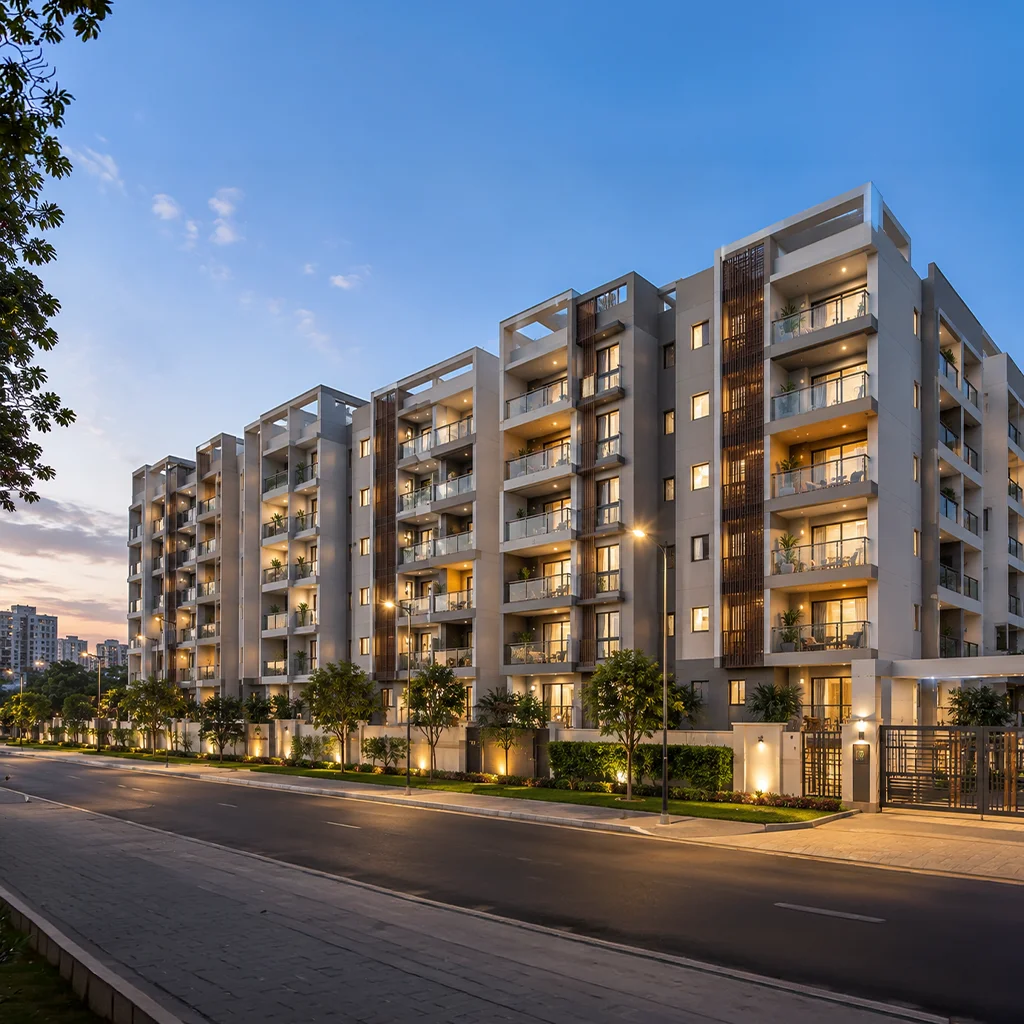
Apartments or flats are among the most common types of houses in India, particularly in cities and densely populated urban areas. The terms "flat" and "apartment" are generally used interchangeably to describe an individual residential unit within a larger building or development.
Apartments may be located in standalone residential buildings, gated communities, or townships. Depending on the development, residents may have access to shared facilities such as gyms, parks, swimming pools, clubhouses, and parking areas.
Common areas are typically maintained through a residents' association, society, or property management system. Apartments can be suitable for families, professionals, and first-time homebuyers looking for convenience, security, and access to shared amenities.
2. Studio Apartments
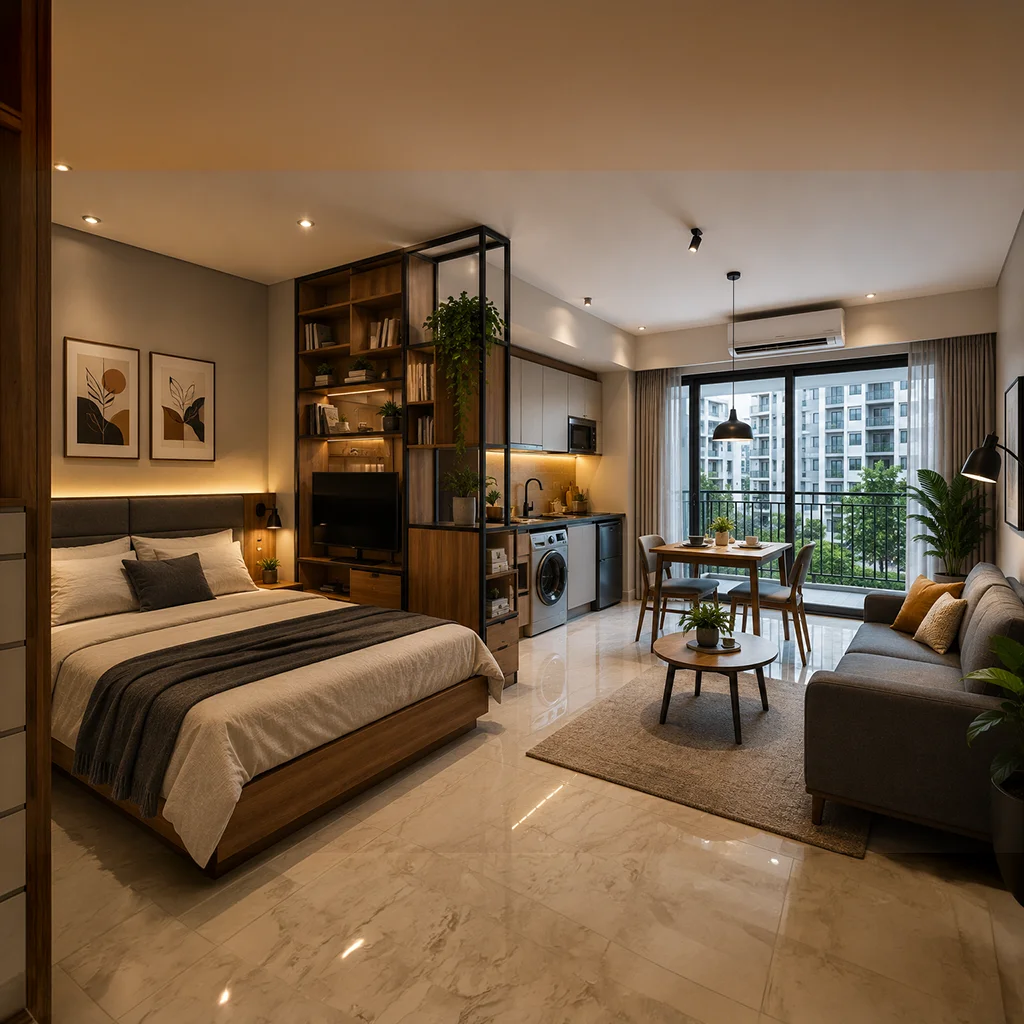
Studio apartments are compact homes designed to make efficient use of limited space. They generally combine the living, sleeping, and kitchen areas into one open-plan space, with a separate bathroom.
Because of their compact layouts, studio apartments can be easier to maintain than larger homes. They may appeal to students, singles, young professionals, and individuals who prefer a smaller living space.
When evaluating a studio apartment, buyers should consider factors such as location, floor plan, storage space, ventilation, natural light, maintenance costs, and their lifestyle requirements.
For a more detailed understanding of this housing format, buyers can also explore the meaning and features of a studio apartment.
3. Duplex Houses
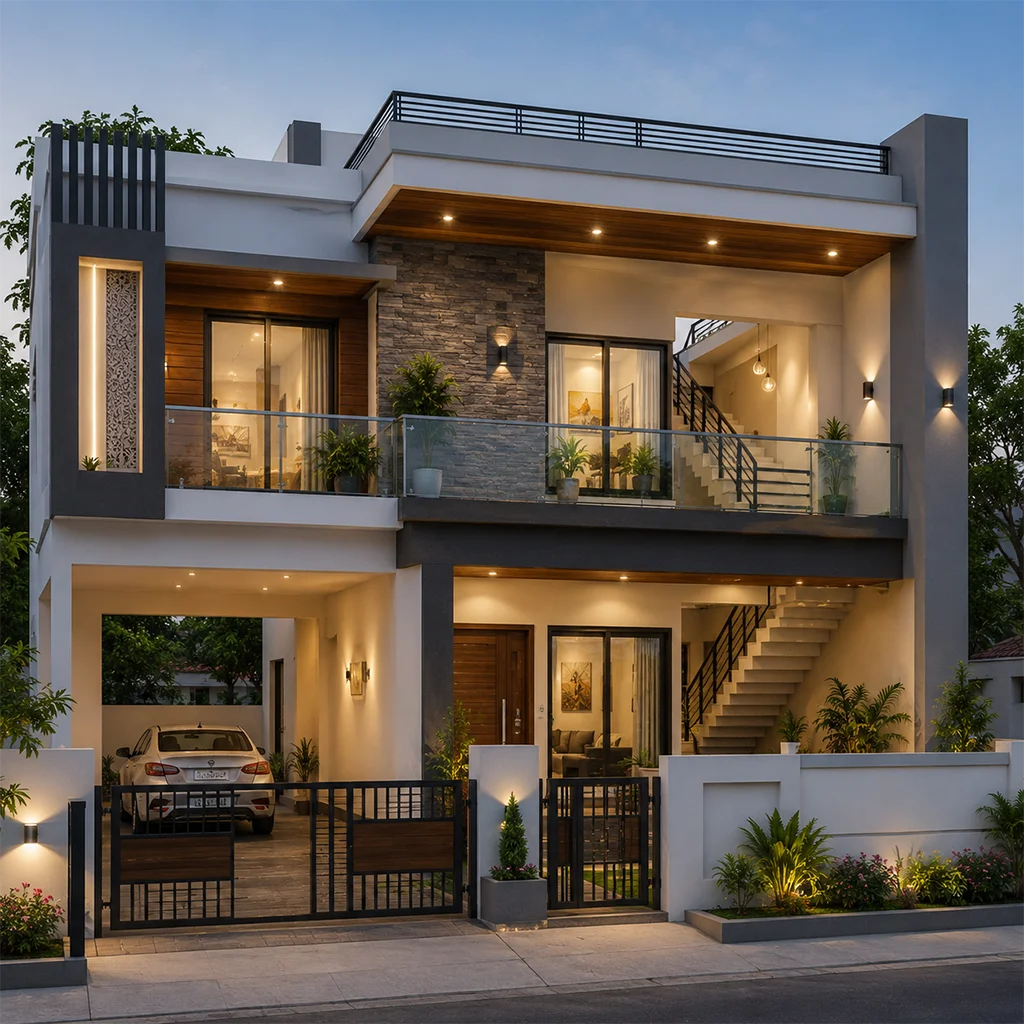
A duplex type house is generally a home spread across two connected floors, with both levels forming part of the same residential unit. The floors are usually connected by an internal staircase, allowing residents to use both levels as one home.
A typical duplex may have the living room, dining area, kitchen, and one bedroom on the lower floor, with additional bedrooms or private spaces on the upper floor. The exact layout varies by property.
Duplex houses can provide a house-like living experience while being part of a gated community or larger residential development. When evaluating one, buyers should consider the staircase layout, room placement, ventilation, natural light, and accessibility between the two floors.
4. Villas
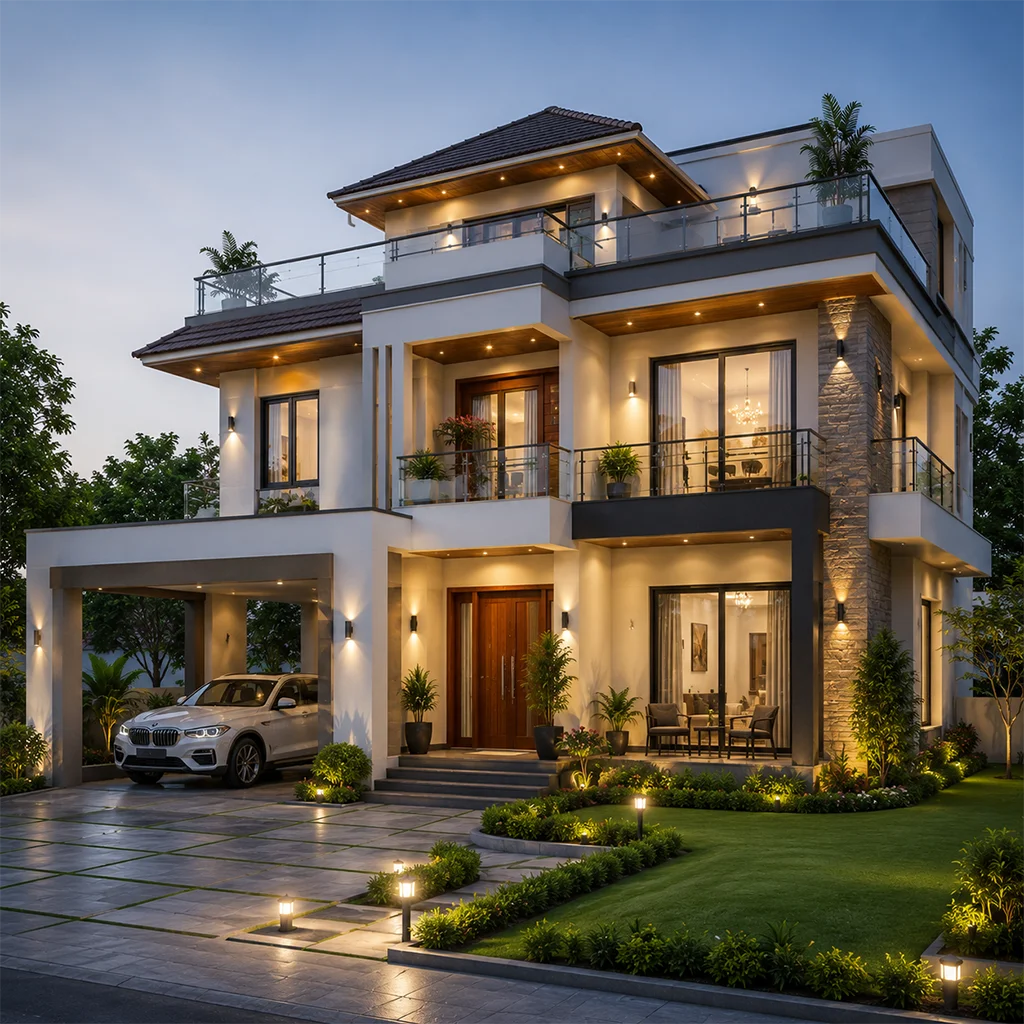
Villas are generally detached or semi-detached homes designed to provide greater privacy and dedicated living space. They may be single-storey or multi-storey and often include features such as private gardens or yards, parking spaces, balconies, and larger rooms.
Many villas are developed within gated communities where residents may also have access to shared amenities. Compared with apartments, villas generally provide greater control over private outdoor areas and may offer more flexibility in how the living space is used.
Villas are unique among all kinds of houses and can be suitable for families seeking additional space, privacy, and access to community facilities.
5. Bungalow
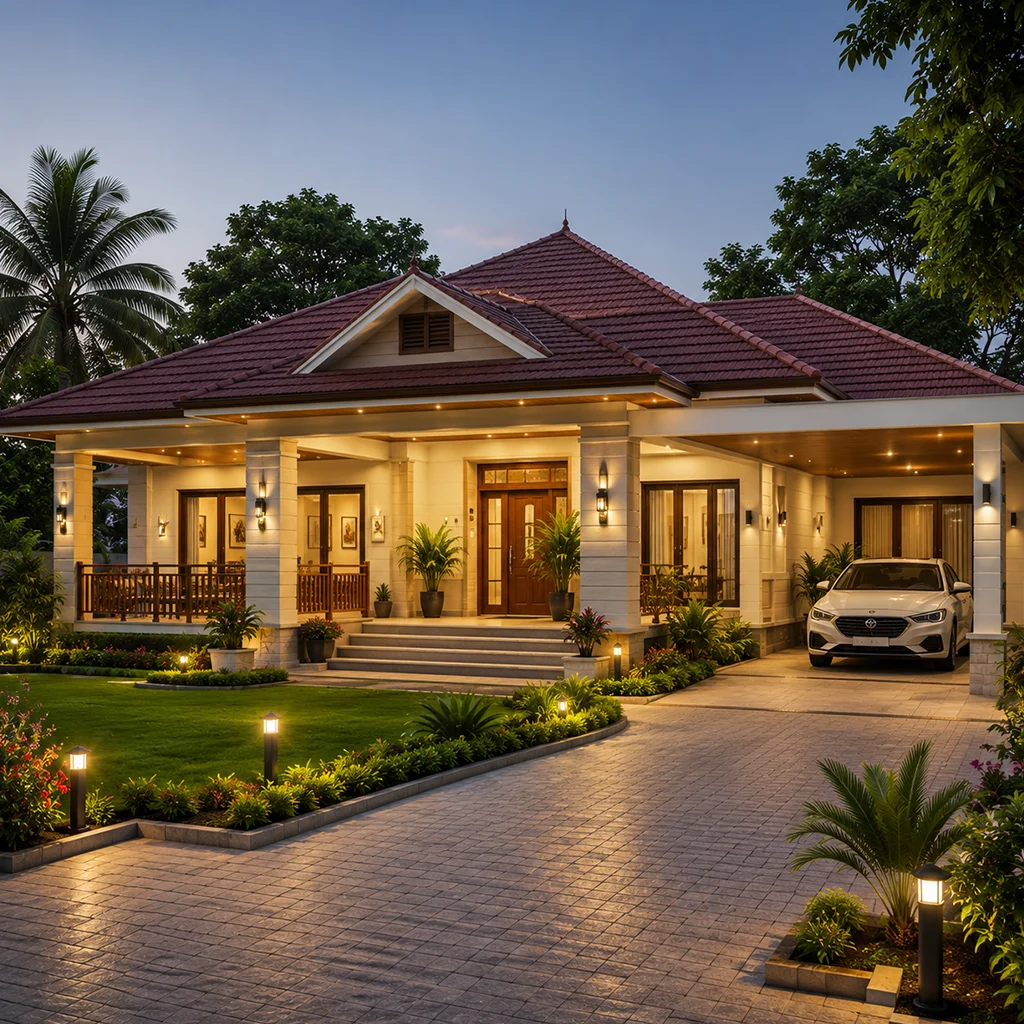
A bungalow is generally a detached, single-family home designed as a low-rise residence, traditionally with one storey or, in some cases, one-and-a-half storeys.
The single-level layout, privacy, and functionality of this bungalow house type can be suitable for families who prefer not to live across multiple floors. In India, bungalows usually have a private entrance and may include outdoor areas such as gardens, lawns, verandas, or parking spaces.
Bungalows can be suitable for families looking for independent living and greater control over their residential space.
6. Farmhouses
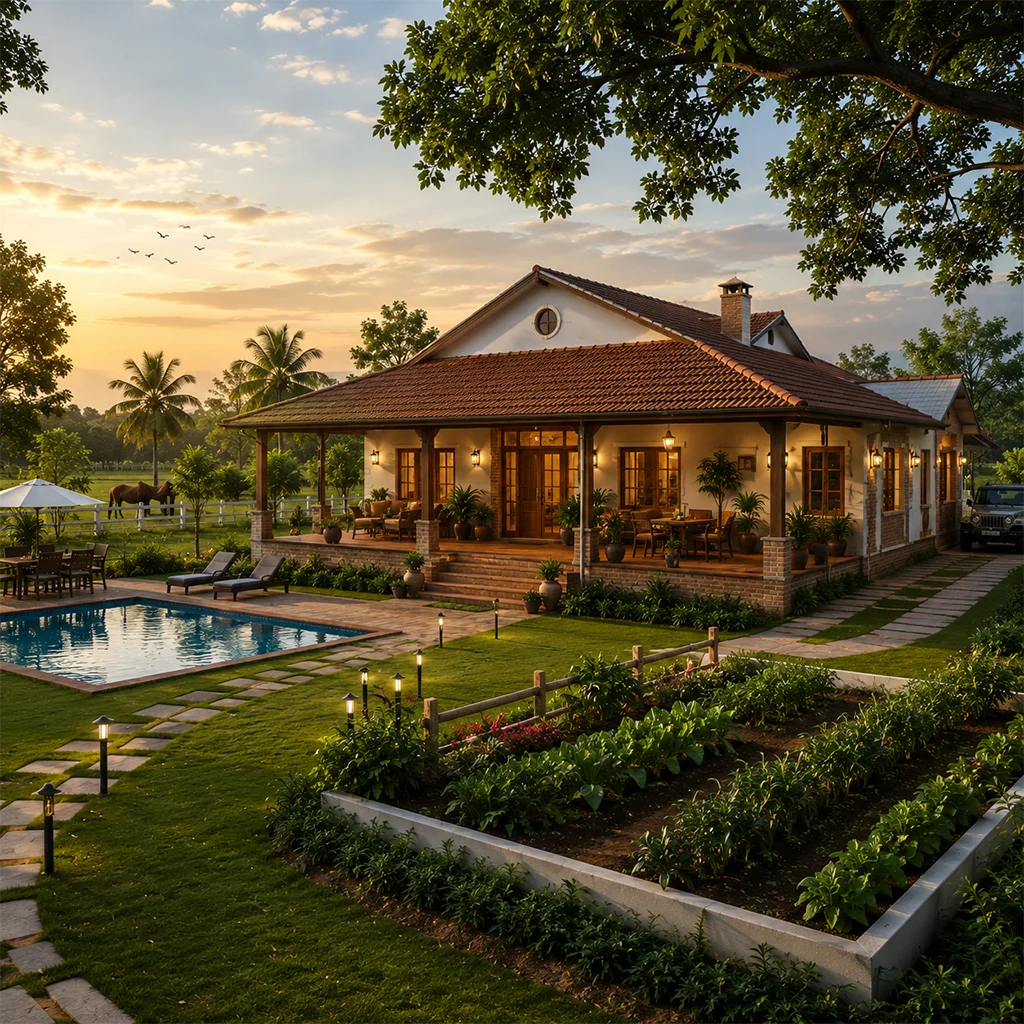
Farmhouses are properties generally located in rural or peri-urban areas and may include a residential structure along with surrounding land. Depending on the property, the land may be used for agriculture, gardening, recreation, or a combination of permitted purposes.
Farmhouses are often used as weekend retreats, holiday homes, or second homes. They can be single- or multi-storey, depending on the design and applicable regulations.
Buyers should carefully check land classification, permitted land use, construction approvals, road access, water availability, utilities, and other local regulations before purchasing a farmhouse property.
Among the different types of houses, a farmhouse may be a suitable option for people who prefer open spaces, privacy, and a closer connection to the outdoors.
7. Condominiums
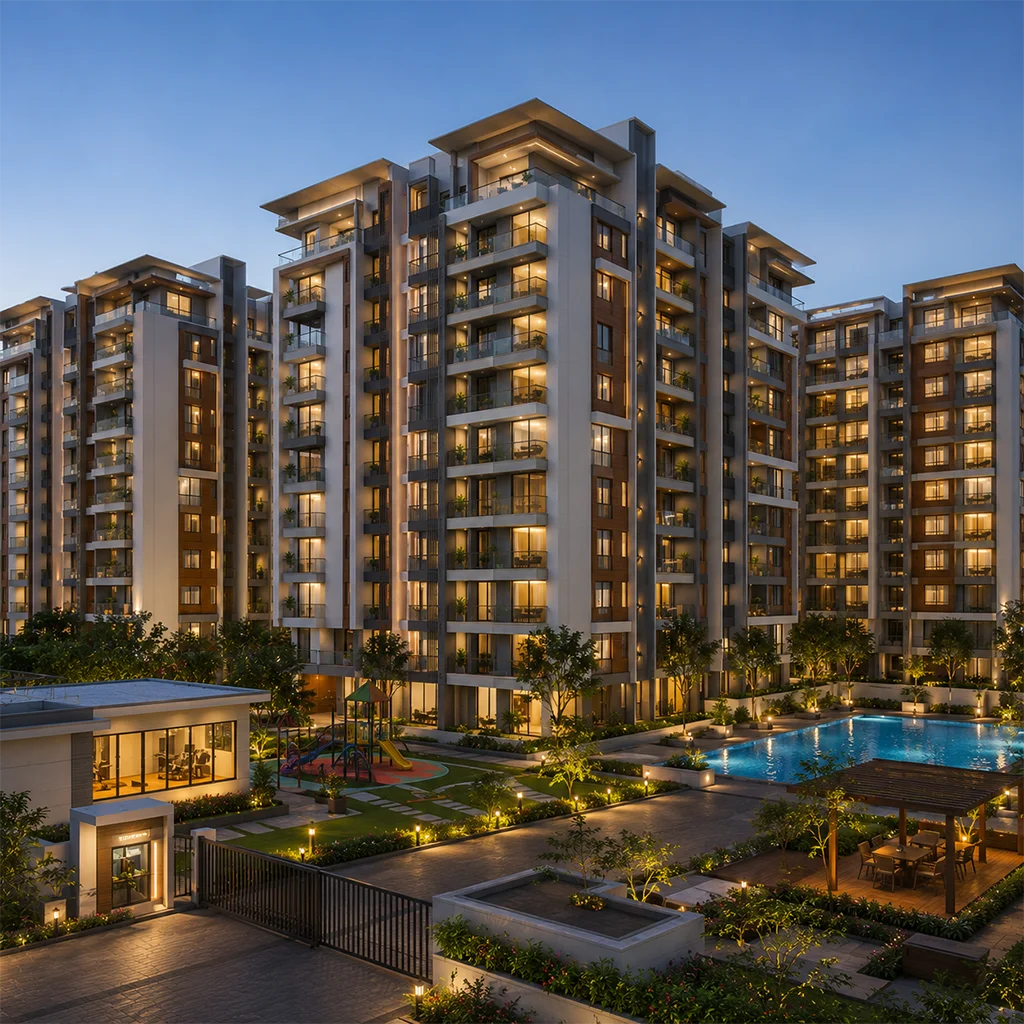
A condominium, commonly called a condo, is a multi-unit residential building type in which individual units are privately owned while common areas and facilities are shared among the owners. Common areas may include lobbies, corridors, parking areas, swimming pools, gyms, and other amenities. These areas are generally managed and maintained through an association, society, or similar management structure.
Condominium living can suit people who want private ownership of their residential unit while also having access to shared facilities. Any alterations to an individual unit may be subject to building regulations, association rules, and required approvals.
8. Cottages
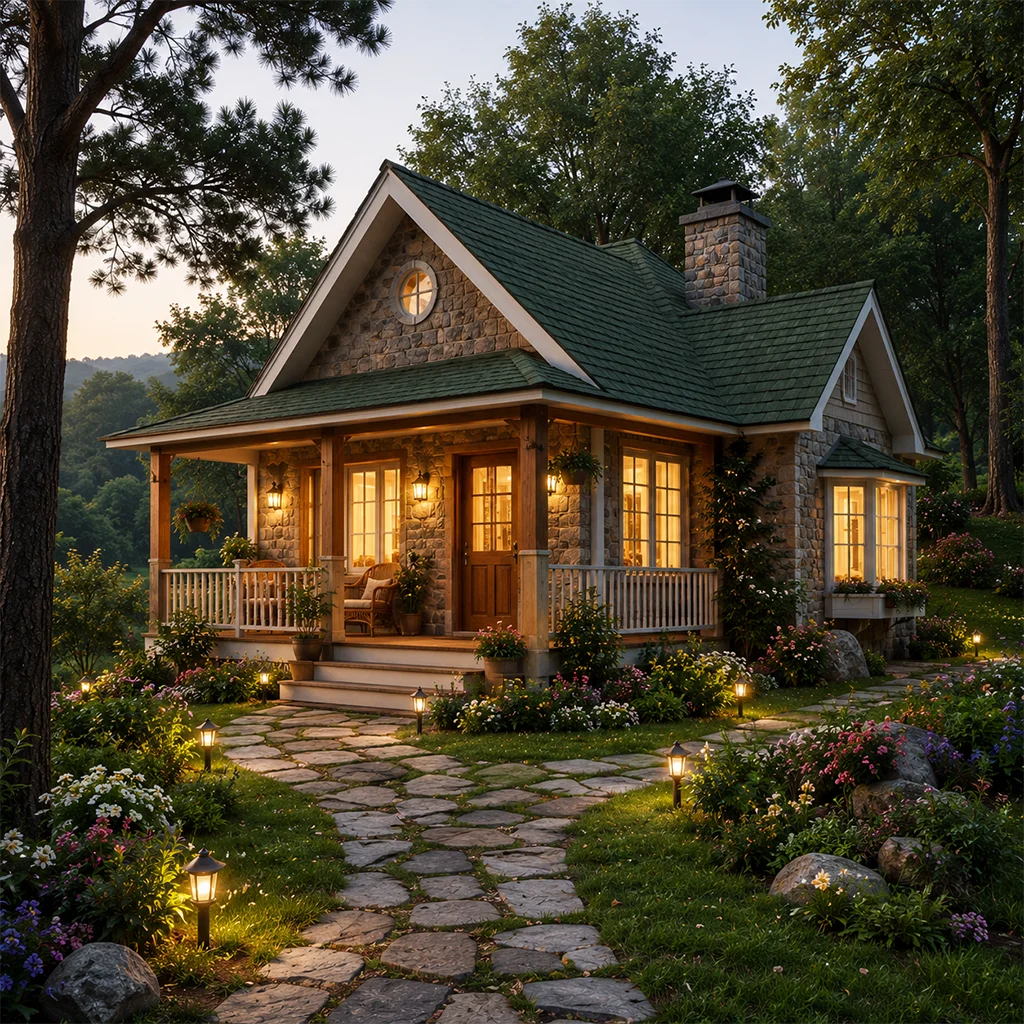
Cottages are typically small, comfortable homes associated with natural or recreational surroundings. They may feature sloping roofs, compact interiors, verandas, balconies, or porches.
Cottages are commonly found in hill stations, rural areas, coastal locations, and resort destinations. They are often used as holiday homes, weekend retreats, or vacation properties.
Their smaller size can make them relatively manageable to maintain, although buyers should consider accessibility, weather conditions, utilities, connectivity, and local building regulations.
9. Penthouses
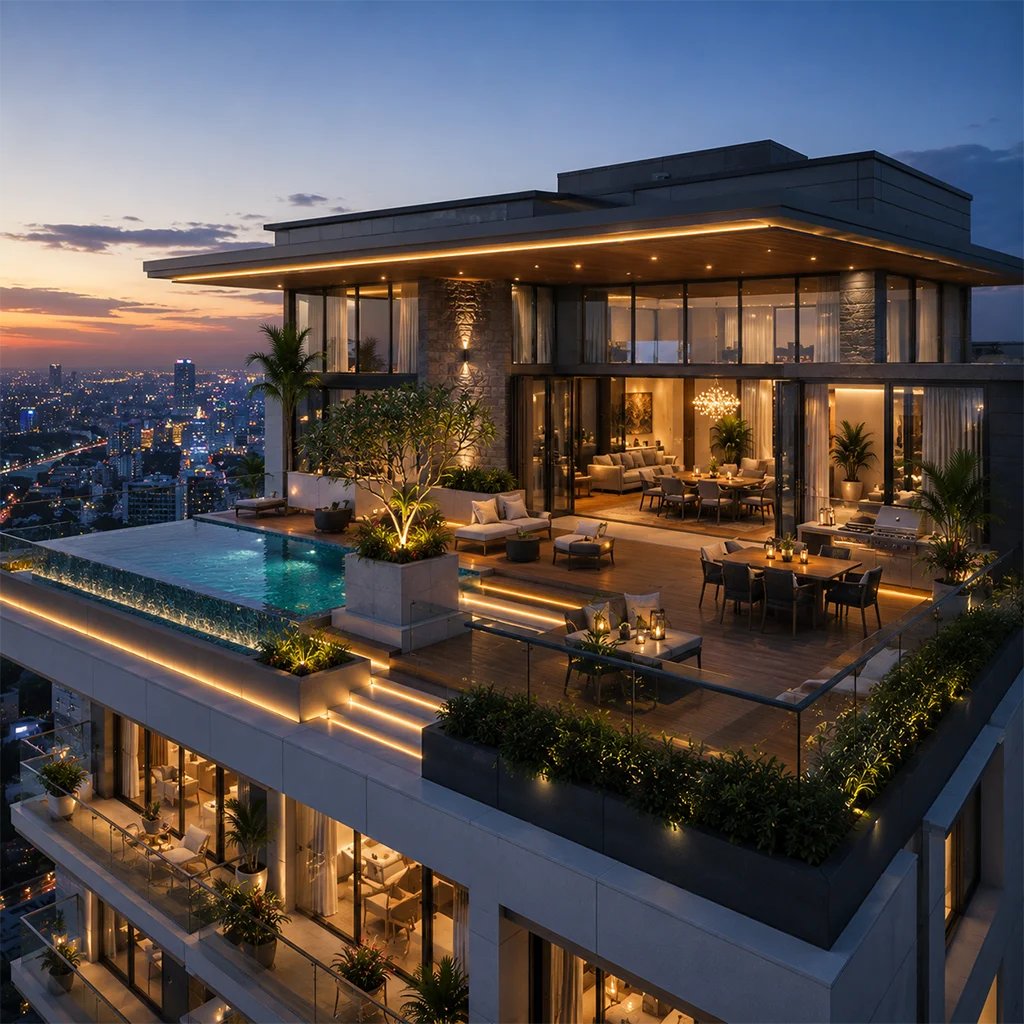
A penthouse is generally a premium residential unit located on the top floor or uppermost level of a high-rise building. Penthouses often have larger layouts than standard apartments and may feature private terraces, balconies, higher ceilings, spacious living areas, or upgraded finishes.
Depending on the property, a penthouse may also include features such as private outdoor areas, rooftop gardens, or dedicated amenities. They are generally positioned at the higher end of the residential market because of their location, space, views, and features.
10. Eco-Friendly Houses
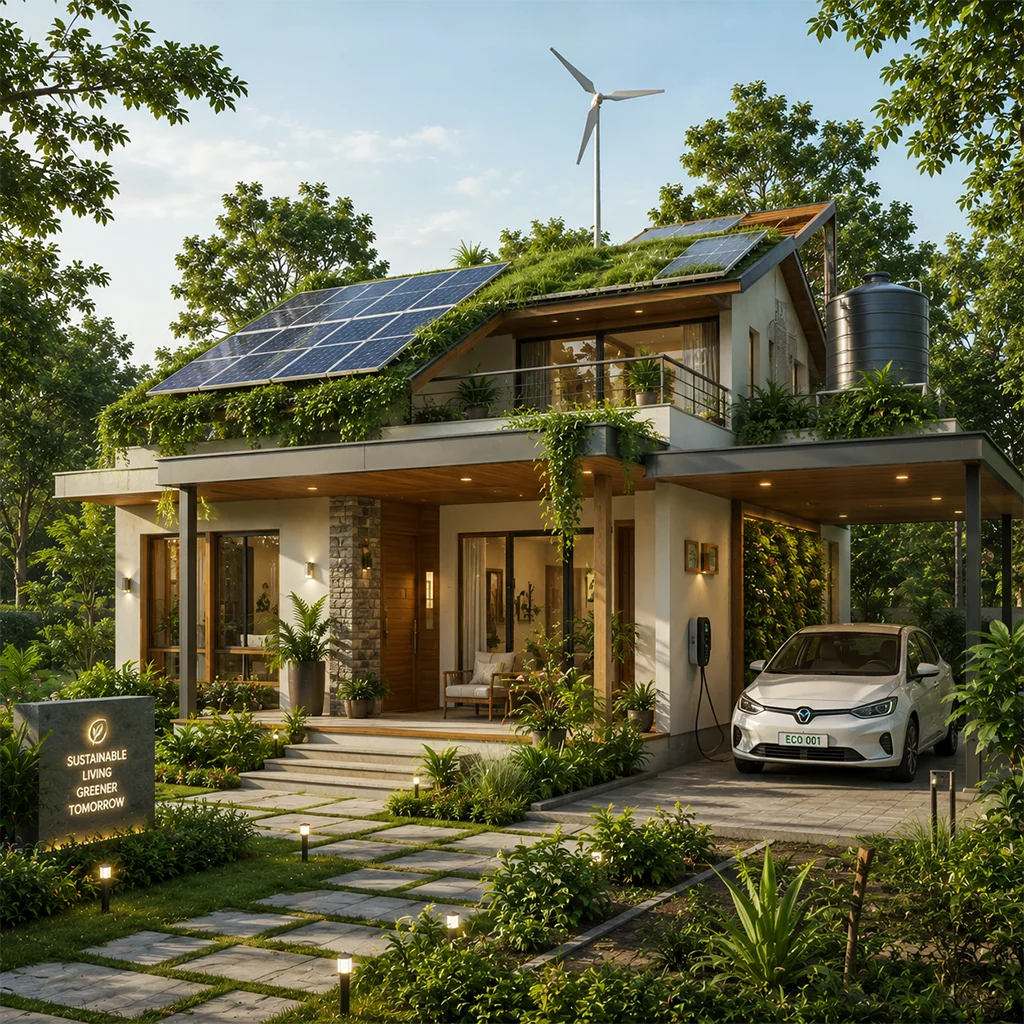
Eco-friendly houses are designed to reduce energy consumption, conserve water and other resources, minimise waste, and lower environmental impact.
Their design may incorporate features such as:
- Natural ventilation
- Energy-efficient lighting
- Rainwater harvesting
- Solar energy systems
- Energy-efficient appliances
- Water-saving fixtures
- Sustainable construction materials
The suitability of these features depends on the plot, local climate, budget, design, and applicable regulations. If you are purchasing land to build a home, eco-friendly design principles can be incorporated during the planning and construction stages.
Also Read: Green Homes: Meaning, Benefits and Valuable Tips
Traditional Types of Houses in India
India's architectural heritage includes several traditional house styles shaped by regional climate, culture, materials, and local building practices. These traditional types of houses in India continue to influence modern residential architecture in different parts of the country.
Some notable examples include:
- Havelis: Havelis are traditional large residences historically associated with regions such as Rajasthan, Gujarat, and parts of North India. They often feature courtyards, decorative facades, balconies, and detailed architectural elements. Many historic havelis were designed around a central courtyard to support ventilation, natural light, and private outdoor space.
- Courtyard Houses: Courtyard houses are designed around an open central courtyard that connects different parts of the home. This layout can support natural light, ventilation, interaction among family members, and privacy. Courtyard homes can be found in several regions of India, with their designs adapted to local climates, materials, and traditions.
- Kerala-Style Traditional Houses: Traditional Kerala homes, commonly associated with the nalukettu design, often feature a central courtyard surrounded by rooms. Sloping roofs, timber elements, verandas, and climate-responsive designs are common characteristics. These homes are traditionally designed to suit Kerala's warm and humid climate while providing ventilation and shaded spaces.
- Assam-Type Houses: Assam-type houses are traditionally designed to respond to the region's heavy rainfall and climatic conditions. They may feature lightweight construction, sloping roofs, raised floors, and materials suited to local conditions. Modern versions may combine these traditional principles with contemporary construction techniques and materials.
Comparison of Different Types of Houses in India
Different residential building types offer different levels of space, privacy, maintenance, ownership structure, and community amenities. The table below provides a general comparison of the major types of houses in India.
| House Type | Typical Features | Maintenance | Suitable For |
|---|---|---|---|
| Apartments/Flats | Shared amenities, different unit sizes, community living | Low to Moderate | Families, professionals, first-time homebuyers |
| Studio Apartments | Compact open-plan layout, limited private space | Low | Students, singles, young professionals |
| Duplex Houses | Two connected floors, internal staircase, larger layout | Moderate | Families seeking more space |
| Villas | Private outdoor space, parking, larger rooms, gated communities | Moderate to High | Families seeking space, privacy, and comfort |
| Bungalows | Detached low-rise home, private entrance, outdoor space | Moderate to High | Families seeking independent living |
| Farmhouses | House with surrounding rural or peri-urban land | Moderate to High | Weekend-home users, outdoor enthusiasts |
| Condominiums | Privately owned units with shared common areas | Low to Moderate | Urban families, professionals, investors |
| Cottages | Small homes with cosy interiors, porches, and natural surroundings | Low to Moderate | Holiday-home owners, couples, nature lovers |
| Penthouses | Upper-floor unit, spacious layout, terrace or premium features | High | Luxury-home buyers |
| Eco-Friendly Houses | Energy and resource-efficient design features | Varies | Environment-conscious homeowners |
How to Choose the Right Type of House
The right home depends on your individual requirements rather than simply choosing the largest or most expensive option. Before selecting among the different types of houses, consider the following factors:
- Budget: Consider the purchase price as well as ongoing costs such as maintenance, property taxes, utilities, repairs, and community charges.
- Family Size and Space Requirements: A studio apartment may work for an individual, while larger families may prefer apartments with multiple bedrooms, duplexes, villas, or independent houses.
- Privacy: If privacy is a priority, villas, bungalows, and independent houses may provide more private space than apartments or condominiums.
- Maintenance: Apartments may offer relatively lower individual maintenance responsibilities because common areas are generally managed collectively. Larger independent properties may require greater responsibility for repairs, gardens, security, and other facilities.
- Location and Connectivity: Consider proximity to workplaces, schools, healthcare facilities, transportation, shopping areas, and other daily necessities.
- Future Requirements: Think about whether the property will continue to meet your requirements as your family, lifestyle, or work arrangements change.
Conclusion
Choosing among the types of houses in India depends on factors such as your budget, family size, preferred location, privacy requirements, maintenance responsibilities, and lifestyle. Apartments may suit buyers looking for convenience and shared amenities, while villas, bungalows, and duplexes can offer greater space and privacy.
Farmhouses and cottages may appeal to those seeking more connection with outdoor surroundings, while traditional homes reflect India's regional architectural diversity. Before making a decision, compare the property's layout, ownership structure, maintenance requirements, location, approvals, and long-term suitability to find a home that matches your needs.
For those exploring plots in Chennai and nearby areas, options such as Minjur, Madhavaram, Manali New Town can be evaluated based on location, plot characteristics, infrastructure, and intended use.
Frequently Asked Questions (FAQs)
Recent Blogs
Plots by Locations
- Plots for Sale in Chennai
- Plots for Sale in Thirumazhisai
- Plots for Sale in Madhavaram
- Plots for Sale in Manali New Town
- Plots for Sale in Mudichur
- Plots for Sale in Naduveerapattu
- Plots for Sale in Poonamallee
- Plots for Sale in ECR
- Plots for Sale in Kundrathur
- Plots for Sale in Mangadu
- Plots for Sale in Manimangalam
- Plots for Sale in Maraimalai Nagar
- Plots for Sale in Minjur
- Plots for Sale in Moolakadai
- Plots for Sale in Pallavaram
- Plots for Sale in Perambur
- Plots for Sale in Redhills
- Plots for Sale in Tambaram
- Plots for Sale in Ponneri
- Plots for Sale in Thandalam
- Plots for Sale in Perungalathur
- Plots for Sale in Vandalur
- Plots for Sale in Tiruvottiyur
- Plots for Sale in Tondiarpet
- Plots for Sale in Villivakkam