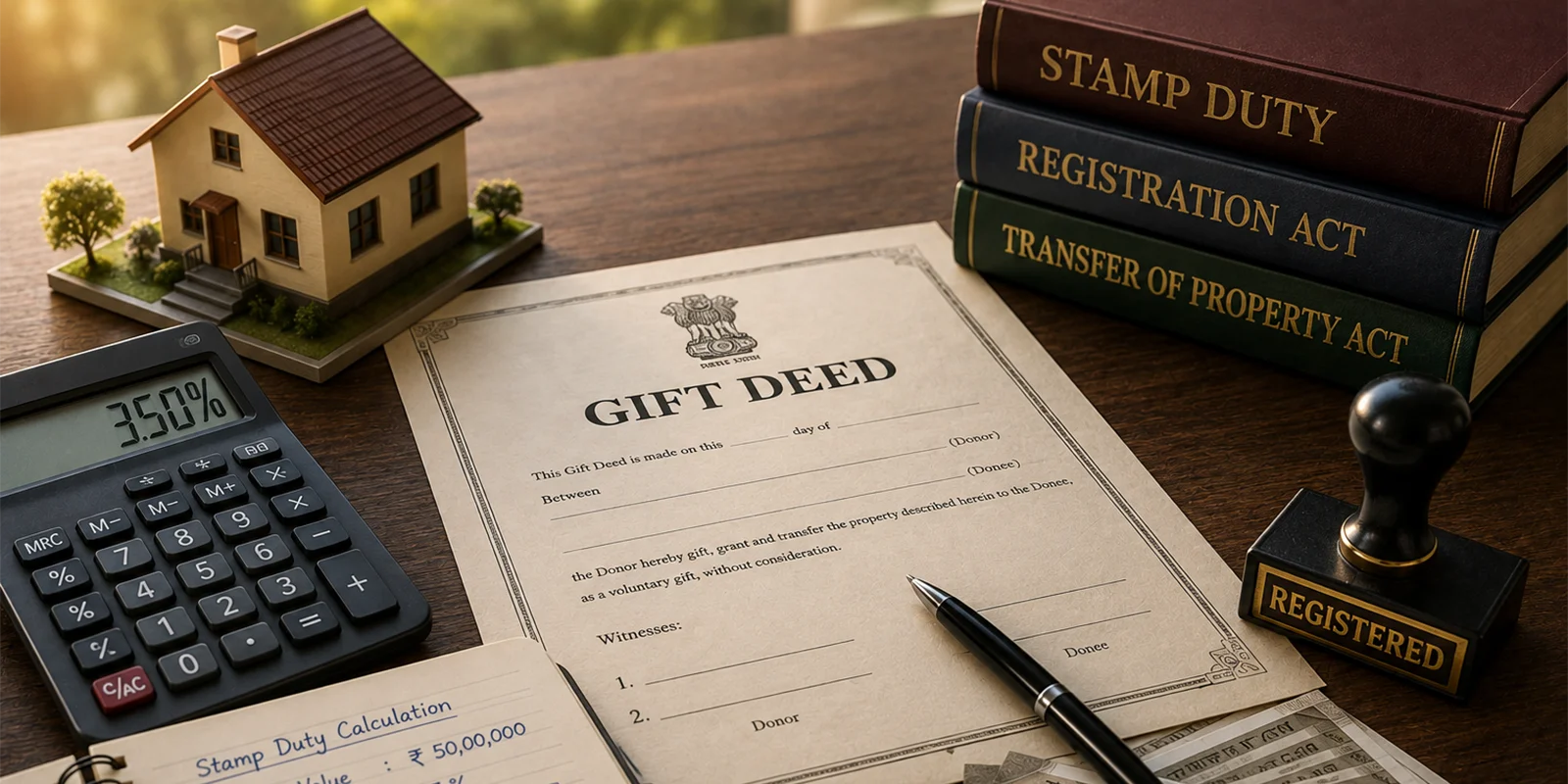

Fair Market Value of Property: Meaning, Factors & Calculation
Fair market value is the estimated price a property would reasonably fetch in an open market between a willing buyer and a willing seller, with both parties informed and neither forced to transact. It is usually estimated by comparing similar recent sales and adjusting for location, size, condition, permitted use and market conditions. For land and buildings, the estimate may also be cross-checked using cost or income-based methods. Fair market value is not automatically the same as the government guideline value, registered sale price or a lender’s valuation.
Buying, selling or investing in real estate involves more than agreeing on an asking price. A seller may set a price based on expectations, while a buyer may focus on affordability, future development and comparable properties. Understanding fair market value helps both sides assess whether a proposed price is reasonable in the prevailing market.
In simple terms, fair market value means the price a property would likely command in an open and competitive market when both buyer and seller are willing, reasonably informed and not under pressure to complete the transaction. The fair market value of a property is an estimate based on available evidence, not a guaranteed sale price. The final transaction can differ due to negotiation, urgency, financing, legal issues or changes in demand.
This guide explains how fair market valuation works, the methods used to estimate it, the difference between market and government values, and how buyers and sellers can check valuation of property before making a decision. It also explains what fair market value means when compared with government-notified rates and transaction prices.
Table of Contents
- What Is Fair Market Value of Property?
- Why Is Fair Market Value Important?
- Factors That Affect Property and Land Value
- How Is Fair Market Value Calculated?
- Worked Example: Calculate the Value of a Property
- Fair Market Value vs Market Value vs Guideline Value
- How to Check the Valuation of Property Online?
- When Should You Get a Professional Valuation?
- Checklist Before Relying on a Property Valuation
- Conclusion
- Frequently Asked Questions (FAQs)
What Is Fair Market Value of Property?
Fair market value is the estimated price at which a property would change hands under normal market conditions. The estimate assumes that both parties have reasonable knowledge of the property and relevant market information, and that neither is compelled to buy or sell. In real estate, it is commonly assessed using recent comparable transactions, the property’s physical condition, location and permitted use.
The fair value of property may be different from the price advertised by the seller. An asking price is a negotiation starting point; fair market value is an evidence-based estimate. Similarly, a valuation report gives an opinion as of a particular date and depends on the assumptions, data and method used.
For example, two plots in the same locality may have different values because one has better road access, a more regular shape, approved land use or clearer title. This is why the land fair value should be assessed using comparable properties and property-specific adjustments rather than a broad locality average alone. Comparing land fair value with recent registered sales can help identify a reasonable range.
Why Is Fair Market Value Important?
- Buyers: Helps evaluate whether the asking price is reasonable and supports informed negotiation.
- Sellers: Helps set a realistic asking price and reduces the risk of overpricing or undervaluing an asset.
- Loan applicants: Lenders may arrange their own valuation to assess collateral and loan exposure; their valuation may differ from the expected sale price.
- Tax and registration: Government-notified values and tax rules may be relevant to a transaction, but the applicable benchmark depends on the state, purpose and current law.
- Investors: Helps compare purchase price, rental potential, likely appreciation and expected return.
Fair value home buyers can use a valuation as one input alongside title checks, building approvals, inspection findings, maintenance costs and affordability. A valuation alone does not confirm legal ownership or guarantee future appreciation. In other words, fair value home buyers rely on should be supported by current comparable data, not just a listing price.
Also Read: How to Verify Land Ownership Before Buying: A Buyer’s Guide
Factors That Affect Property and Land Value
-
Location and connectivity
Access to roads, public transport, workplaces, schools, hospitals and commercial centres can affect demand and pricing.
-
Recent comparable transactions
Recent sales of similar properties in the same micro-market provide a useful benchmark. Asking prices alone are weaker evidence than completed transactions.
-
Size, layout and physical condition
Plot dimensions, frontage, shape, usable area, building age, construction quality, repairs and amenities can increase or reduce value.
-
Land use and approvals
Residential, commercial, agricultural or mixed-use classification, zoning, layout approval and development restrictions affect what can legally be built or operated.
-
Infrastructure and neighbourhood
Utilities, drainage, road quality, planned infrastructure and local services can influence market demand, subject to actual project status.
-
Legal and title position
Encumbrances, disputes, unclear title or missing approvals may reduce marketability and affect a buyer’s willingness to pay.
-
Market and financing conditions
Supply and demand, interest rates, credit availability, employment and local economic conditions can shift prices over time.
How Is Fair Market Value Calculated?
There is no single formula that works for every property. The right method depends on the asset type, available data and purpose of valuation. A professional market valuation of property may use one method or cross-check multiple methods. For a step-by-step overview, see our guide to property valuation methods and calculation.
-
Comparable Sales Method
This method compares the property with similar properties recently sold in the same area. The valuer adjusts for differences such as size, location, age, frontage, condition, amenities and approvals.
Indicative formula: Estimated value = Adjusted rate per square foot × Property area.
-
Cost Approach
The cost approach estimates the current cost of constructing a similar building, subtracts depreciation for age and condition, and adds the value of the land. It can be useful for newer or specialised buildings where comparable sales are limited.
Indicative formula: Property value = Land value + Replacement cost of improvements − Depreciation.
-
Income Approach
This method is often used for rented residential units, offices, shops and other income-producing assets. It estimates value from the net operating income the property can generate and an appropriate capitalisation rate.
Indicative formula: Estimated value = Annual net operating income ÷ Capitalisation rate. For example, if annual net operating income is ₹6,00,000 and the supported capitalisation rate is 6%, the indicative value is ₹1 crore. This is an illustrative calculation, not a market quote.
-
Residual or Development Approach
For land intended for development or redevelopment, the valuer may estimate the likely value of the completed project and subtract development costs, finance costs, fees and the required developer’s profit. The assumptions can significantly affect the result.
The final fair market valuation should state the valuation date, property details, method, data sources and key assumptions. A simple online estimate may not include all these factors. For a defensible market valuation of property, the report should document its evidence and assumptions.
Also Read: Encumbrance Certificate (EC): How to Check & Apply Online in Tamil Nadu
Worked Example: Calculate the Value of a Property
Assume three comparable plots have recent adjusted sale rates of ₹4,800, ₹5,000 and ₹5,200 per sq. ft. Their average is ₹5,000 per sq. ft. If the plot being assessed measures 1,200 sq. ft. and is broadly comparable, the initial estimate is: For more land-specific guidance, read how to calculate the market value of land.
₹5,000 × 1,200 sq. ft. = ₹60,00,000 (₹60 lakh).
The valuer would then check whether adjustments are needed for frontage, shape, road access, land use, approvals, title status and other differences. If the subject plot is less accessible than the comparable properties, the estimate may need to be reduced. This example shows how market value of land can be estimated; actual valuation requires current local evidence.
Fair Market Value vs Market Value vs Guideline Value
| Term | What it generally means | Important note |
|---|---|---|
| Fair market value | An evidence-based estimate of the price under normal open-market conditions. | Depends on valuation date, assumptions and method. |
| Market value | The price a property is expected to command in the relevant market; often used broadly in real estate. | May be used differently across reports and legal contexts. |
| Agreement / transaction value | The price agreed by the buyer and seller and recorded in transaction documents. | Negotiation and transaction circumstances affect it. |
| Guideline / circle / ready-reckoner value | A government-notified benchmark used for specified registration, stamp-duty or related purposes, depending on the jurisdiction. | Terminology and rules vary by state; it is not necessarily the same as the open-market estimate. |
| Lender valuation | An assessment commissioned by a bank or lender for its lending decision. | May be conservative and is not a promise of the sale price. |
A government benchmark can be above or below the price parties expect in the open market. Before calculating stamp duty or tax, confirm the relevant state rules and the law applicable on the transaction date. The fair value of property used for one purpose may not be the figure used for another.
How to Check the Valuation of Property Online?
A valuation property calculator can provide a preliminary estimate, but its result is only as reliable as its data and assumptions. Use it as a starting point rather than a substitute for a formal valuation. Treat any valuation property calculator output as a preliminary range, not an official valuation.
- Enter the correct property type, location, plot or built-up area and other requested details.
- Collect recent registered transactions or reliable comparable-sale information from the same locality where available.
- Compare properties with similar size, age, condition, land use, access and approvals.
- Check the relevant state government guideline or registration value for the transaction purpose.
- Review the property’s title, encumbrance, approvals and physical condition separately.
- Get a registered valuer’s report when the transaction is high-value, complex or requires a formal document.
When you check the valuation of property, compare the estimate against multiple sources and note the date of each source. Online tools may not capture private sales, unusual property features, legal issues or recent micro-market changes. A second independent estimate can help you check valuation of property when the first result seems unusual.
When Should You Get a Professional Valuation?
- Before buying or selling a high-value property or land parcel.
- When applying for a loan or using property as collateral, if a formal report is required.
- For inheritance, family settlement, partition, litigation or other legal proceedings.
- When a property has unusual features, complex title history, tenancy issues or development potential.
- When a tax filing or transaction requires a valuation as of a specific date.
Choose a suitably qualified or registered valuer for the intended purpose and confirm that the report meets the requirements of the lender, court, tax authority or other recipient. A chartered accountant or tax professional can advise on the tax treatment of a specific transaction. If you need formal documentation, learn about the property valuation certificate and process.
Checklist Before Relying on a Property Valuation
- Confirm the valuation date and the purpose for which the estimate was prepared.
- Verify the property’s area, boundaries, address, land use and approvals.
- Check the comparable sales used and whether adjustments are explained.
- Review title documents, encumbrance information and any known disputes.
- Compare the estimate with the applicable guideline value without treating the two as interchangeable.
- Check whether the report includes land and building values separately where relevant.
- Keep a copy of the report and supporting documents for negotiation, finance or tax records.
Conclusion
Fair market value helps buyers, sellers and investors judge a property price using evidence rather than assumptions. A reliable estimate combines comparable transactions with the property’s condition, location, permitted use, income potential and legal position. Use online calculators for an initial indication, cross-check government values for the relevant registration purpose, and obtain professional advice when a formal valuation or tax decision is involved.
Also Read: What is Circle Rate? How to Find Property Circle Rate?
Frequently Asked Questions (FAQs)
Recent Blogs





Blog Categories
Plots by Locations
- Plots for Sale in Chennai
- Plots for Sale in Thirumazhisai
- Plots for Sale in Madhavaram
- Plots for Sale in Manali New Town
- Plots for Sale in Mudichur
- Plots for Sale in Naduveerapattu
- Plots for Sale in Poonamallee
- Plots for Sale in ECR
- Plots for Sale in Kundrathur
- Plots for Sale in Mangadu
- Plots for Sale in Manimangalam
- Plots for Sale in Maraimalai Nagar
- Plots for Sale in Minjur
- Plots for Sale in Moolakadai
- Plots for Sale in Pallavaram
- Plots for Sale in Perambur
- Plots for Sale in Redhills
- Plots for Sale in Tambaram
- Plots for Sale in Ponneri
- Plots for Sale in Thandalam
- Plots for Sale in Perungalathur
- Plots for Sale in Vandalur
- Plots for Sale in Tiruvottiyur
- Plots for Sale in Tondiarpet
- Plots for Sale in Villivakkam